
Every piece in Arrow Escape, explained
New pieces arrive slowly, each on its own for a while before it is mixed with the others. Here is what every one of them does and how to play around it.
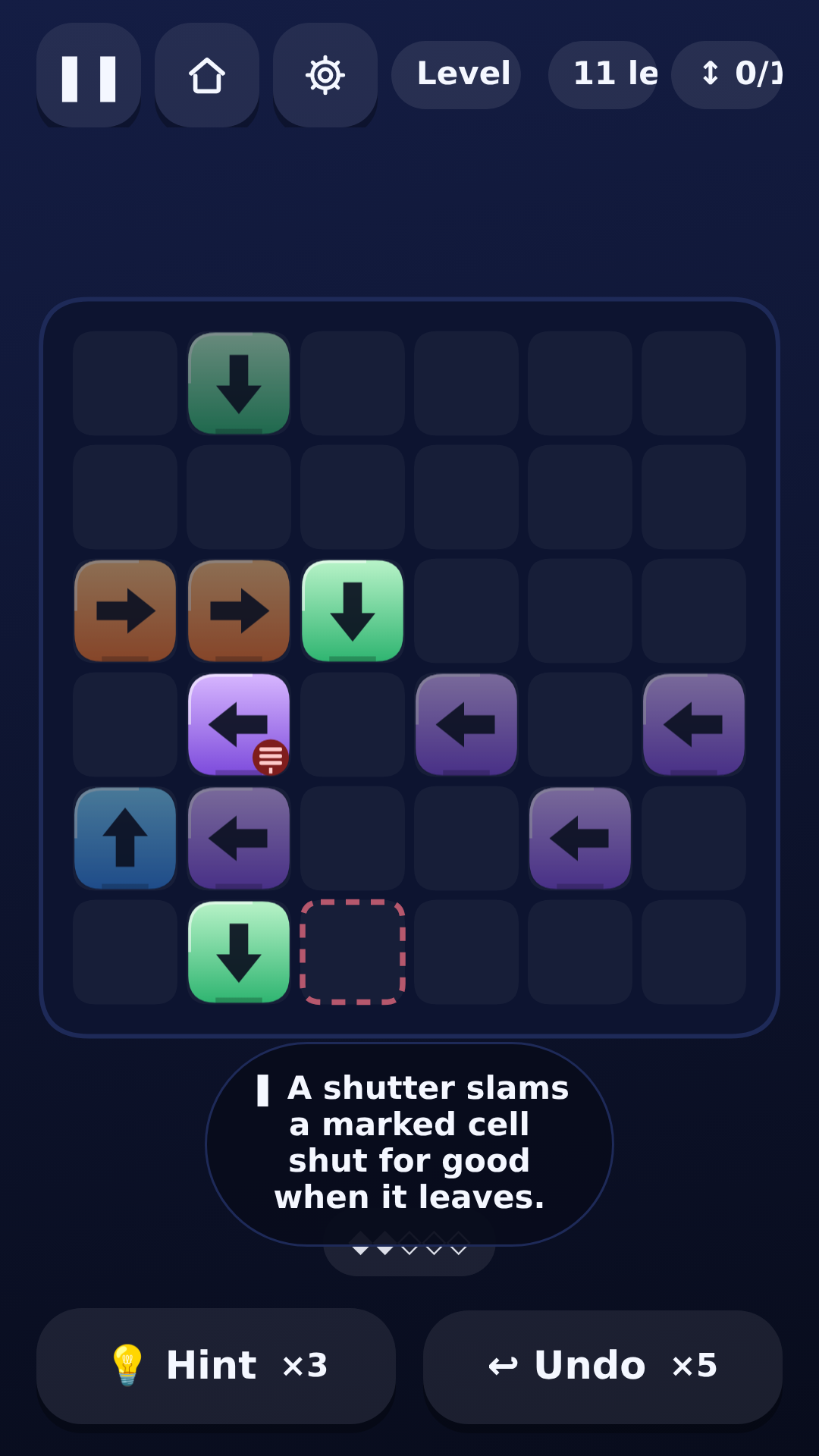
Arrow
The basic piece. It leaves in the direction it points when its path to the edge is clear. Removing an arrow can only open space for others, so it is always safe once it can move.
Ice
Ice needs more than one tap. Each tap chips it; the last one sends it out. Ice is never dangerous — it only takes longer.
Lock and switch
A lock stays shut until its matching switch has left the board. Tapping a locked piece tells you to find the switch first. Treat a lock as a question about its switch: what is blocking the switch, and how do you clear it?
Portal
A portal sends a path out the other side of its pair. A piece whose line runs into a portal continues from the partner portal, so a clear path can bend across the board. Trace the line through both ends before you decide a piece is blocked.
Rotator
A rotator turns its whole group a quarter turn as it leaves. Arrows that pointed at an open edge may end up pointing into other pieces, and the reverse. This is one of the two pieces that can make a move wrong, so picture the turn before you tap.
Shutter
When a shutter leaves, it slams a marked cell shut for good. Nothing can pass through that cell afterwards. Every piece whose path crosses the marked cell must be gone before the shutter is. The final stretch of the game, from level 1,001, is built around shutters.
Which pieces are safe?
- Always safe to remove: arrow, ice, lock, switch, portal.
- Can cause a dead end: rotator, shutter.
- So: clear the safe pieces first, then think carefully about the order of the rest.
Questions
When does each piece first appear?
Shutters from level 10, locks and switches from level 25, rotators and portals in the later bands, and all of them combined from level 901.
Is there a list of pieces in the game?
Yes — open How to play from the menu for a short description of each one.